
How to Support a Child with Autism at Home Every Day
Most people do not expect it to feel this overwhelming until it does.
You are trying to keep the day moving. You are trying to keep your child calm. You are trying to do the right thing. And somewhere in the middle of routines, transitions, emotions, and constant adjustments, it can start to feel like every small part of the day takes more energy than it should.
If that is where you are right now, you are not alone.
Many families want to know how to support a child with autism at home in a way that feels steady, loving, and realistic. Not perfect. Just doable. Just helpful. Just enough to make home feel a little calmer for everyone.
That matters more than people realize.
What Families Often Need Most First
Before anything else, it helps to hear this: supporting a child with autism at home does not have to look flawless to be meaningful.
What often helps most is not doing more. It is creating more steadiness in the moments that already happen every day.
That can look like:
- keeping routines more predictable
- using calm, simple language
- preparing for transitions before they happen
- paying attention to sensory stress
- making space for the child to feel safe and understood
For many families, the biggest shift comes when they stop asking, “How do I fix every hard moment?” and start asking, “How do I make everyday life feel safer and more manageable?”
And this is where support starts to matter more.
When It Starts to Feel Like Too Much
At first, it may not seem like much.
A difficult morning here. A rough transition there. Mealtime struggles. Bedtime resistance. Communication that feels hard one day and even harder the next. You tell yourself it is just a phase, or that tomorrow might go better.
But over time, it becomes more than you expected.
This is where many families begin to feel stretched thin by the daily routine. You may notice that the stress is no longer tied to one specific moment. It starts to show up everywhere. Getting dressed becomes a challenge. Leaving the house feels like a lot. Even simple plans can feel like too many moving parts.
And that is where it starts to feel like too much.
Sometimes the hardest part is not one big problem. It is the constant pressure of having to stay alert, adapt quickly, and keep everyone else in the home on track at the same time.
That kind of pressure adds up quietly.
Why This Gets Harder Over Time
Without steady support, small challenges can start becoming bigger ones.
What seems manageable at first may feel heavier later when there is no consistent structure around it. A child who struggles with transitions may begin dreading them more. A child who gets overwhelmed by noise, touch, or changes in routine may have a harder time settling back down. A parent or caregiver who has been “holding it together” may begin feeling worn out in ways they did not notice before.
This is often the moment families do not see coming.
Not because they are doing anything wrong, but because daily stress rarely announces itself all at once. It builds slowly. Then one day, the whole house feels tense.
When that happens, families often start second-guessing themselves.
They wonder if they are being too strict. Too flexible. Too cautious. Not doing enough. Doing too much.
That uncertainty can be exhausting.
Over time, a child can also feel that stress in the home. Even when they cannot explain it, they may respond to it. That is why calm support, predictable routines, and patient companionship matter so much. They help create a sense of safety that the child can feel, even in ordinary moments.
What This Actually Looks Like Day to Day
Daily support at home usually does not come from one big change. It comes from smaller choices repeated with consistency.
That may sound simple, but simple does not mean easy.
Here are a few ways support often looks in real life.
Keep routines as predictable as possible
Many children with autism feel more comfortable when they know what comes next. Predictability can lower stress and make the day feel less confusing.
This might mean keeping wake-up times, meals, quiet time, and bedtime in a similar rhythm whenever possible. It can also help to give a simple heads-up before transitions.
For example: “In five minutes, we are going to clean up and have lunch.”
That small pause can make a big difference.
Use calm, clear language
When a child feels overwhelmed, too many words can make things harder. Short, gentle directions are often easier to process.
Instead of explaining everything at once, try one step at a time. Keep your tone steady. Leave space for the child to respond in their own way.
You might notice that when your voice stays calm, the moment feels more manageable for both of you.
Pay attention to sensory stress
Sometimes what looks like a behavior issue is really a child reacting to something that feels too loud, too bright, too fast, or too uncomfortable.
That could be:
- too much noise in the room
- scratchy clothing
- strong smells
- crowded spaces
- unexpected touch
- a sudden change in the environment
When families start noticing these patterns, they often feel more confident. The goal is not to control every detail. It is to understand what may be making the day harder than it needs to be.
Build in moments of connection
Support is not only about helping through hard moments. It is also about creating calm, positive ones.
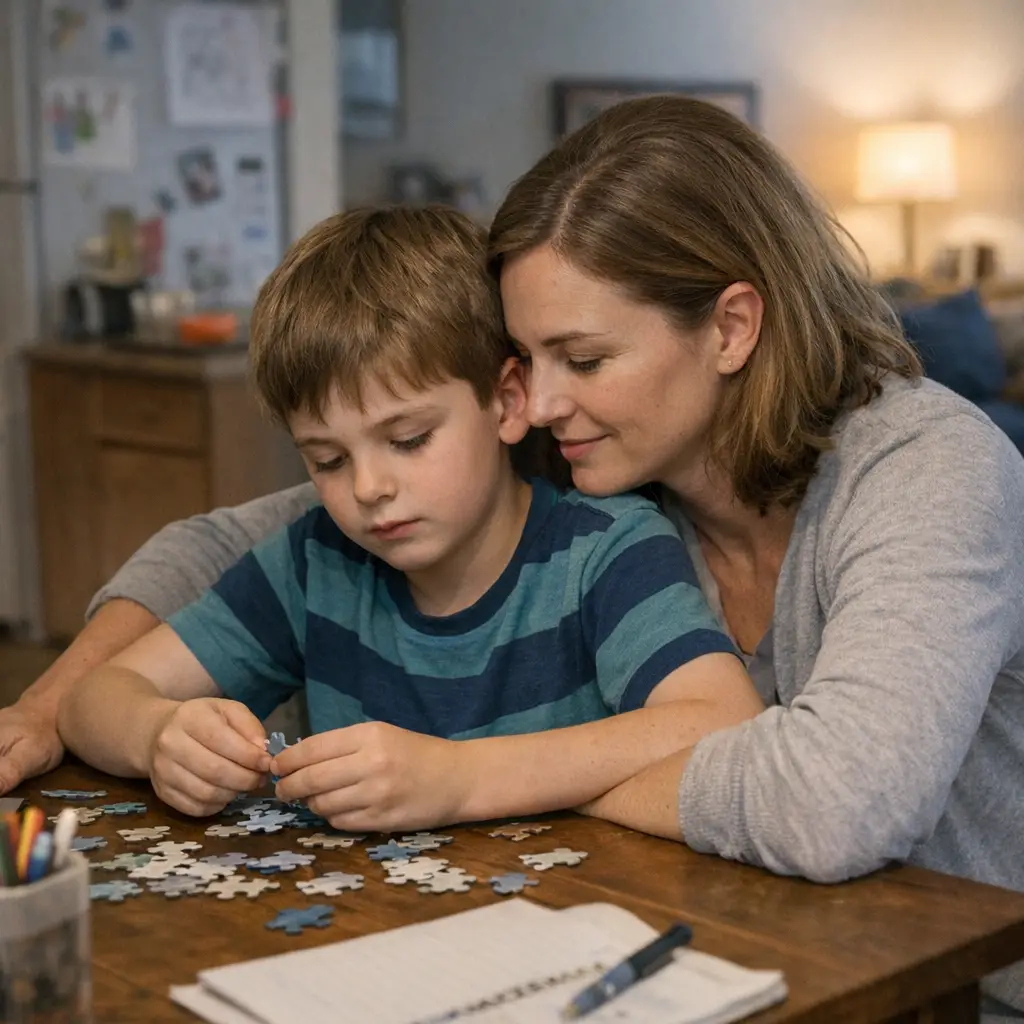
That might be sitting together during a favorite activity, reading a book, doing a puzzle, going on a short walk, or simply being present without pressure. These moments help build trust and comfort over time.
And often, that connection becomes the foundation for everything else.
Make room for recovery after hard moments
Not every tough moment needs to turn into a lesson right away.
Sometimes a child needs time, quiet, space, or a familiar routine before anything else. Families often feel pressure to correct, explain, or solve everything in the moment. But support can also mean knowing when to slow things down instead.
That pause matters.
What Support Can Look Like
Support at home should feel practical and human.
For one family, that might mean help during the busiest part of the morning routine. For another, it may mean having a calm, dependable person present after school, during meals, or in the evening when everyone is tired.
In a non-medical home care setting, support may include companionship, routine help, supervision, assistance with daily activities, and a steady presence that helps reduce strain on the household.
This can be especially helpful when:
- a parent is trying to balance work and caregiving
- a grandparent or relative helps after school
- siblings also need attention and structure
- transitions throughout the day are especially hard
- the family is starting to feel emotionally worn down
The right kind of support does not replace a parent. It helps the home feel more supported.
That difference is important.
A Simple Way to Start
If everything feels like too much right now, start smaller than you think you need to.
Pick one part of the day that feels hardest.
Just one.
Maybe it is getting ready in the morning. Maybe it is after school. Maybe it is dinner. Maybe it is bedtime. Look at that one section of the day and ask:
- What usually makes this moment harder?
- What seems to help, even a little?
- What could be made more predictable?
- Where does everyone start feeling stressed?
You do not need a perfect answer. You just need a clearer starting point.
Once you can see where the stress is building, it becomes easier to understand what kind of support may actually help.
This is where things start to feel lighter.
What to Look for in Help
If your family is considering outside support, it is okay to want more than just availability. You are not simply looking for someone to fill time. You are looking for someone who can bring calm, patience, and consistency into your home.
That means looking for help that feels:
- gentle and dependable
- respectful of your child’s pace and comfort
- able to follow routines
- patient during transitions and emotional moments
- supportive of the whole household, not just one task
You want someone who understands that home support is not about rushing a child through the day. It is about helping the day feel safer, steadier, and easier to move through.
For many families, that kind of companionship makes a real difference.
Common Mistakes Families Make
Most mistakes come from stress, not from lack of love.
That is worth saying clearly.
Families doing their best often fall into patterns that make things harder simply because they are tired, stretched, and trying to get through the day. A few common ones include:
| Mistake | Why It Happens | What Helps More |
|---|---|---|
| Changing routines too often | The day feels unpredictable, so everyone reacts in the moment | Keep a steadier rhythm when possible |
| Using too many words during stressful moments | Caregivers want to explain and help quickly | Use shorter, calmer instructions |
| Expecting every day to go the same way | Families want consistency and progress | Stay flexible while keeping basic structure |
| Waiting too long to ask for help | Many caregivers think they should handle it alone | Recognize when support could ease the pressure |
None of this is about blame.
It is about noticing what may be adding pressure and making simple adjustments that support everyone better.
Questions Families Commonly Ask
How can I support my child with autism at home every day?
Focus on calm routines, simple communication, sensory awareness, patient companionship, and predictable daily structure. Small consistent habits often help more than trying to change everything at once.
What helps when transitions are hard?
Give gentle warnings before changes, keep your language short, and make transitions as predictable as possible. Many families find that preparing the child a few minutes ahead of time helps lower stress.
What if I feel like I am doing everything wrong?
Many caregivers feel this way when daily stress builds up. It does not mean you are failing. It usually means you need more support, more clarity, or a more manageable routine.
Can outside help make a difference at home?
Yes. The right non-medical support can help bring more steadiness to the day through companionship, routine support, and extra help during difficult times of day.
When should a family start looking for help?
A good time to start is when the home feels tense more often than calm, when routines feel harder to manage, or when caregivers are beginning to feel burned out. Many people wait until things feel urgent, but support often helps most when it starts earlier.
A Calm Next Step
If you have been trying to hold everything together on your own, this may be the reminder you need: support does not have to wait until things fall apart.
You can look for help because you want home to feel calmer. Because you want your child to feel more supported. Because you want the day to feel more manageable for everyone in it.
That is a good enough reason.
At Home Health Smiles, we understand that families caring for children with special needs often need more than information. They need dependable, compassionate day-to-day support. Our non-medical in-home care is centered on companionship, routine help, and a calm presence that supports the child and the family.
If what you need right now is steadiness, you do not have to figure it all out alone.