
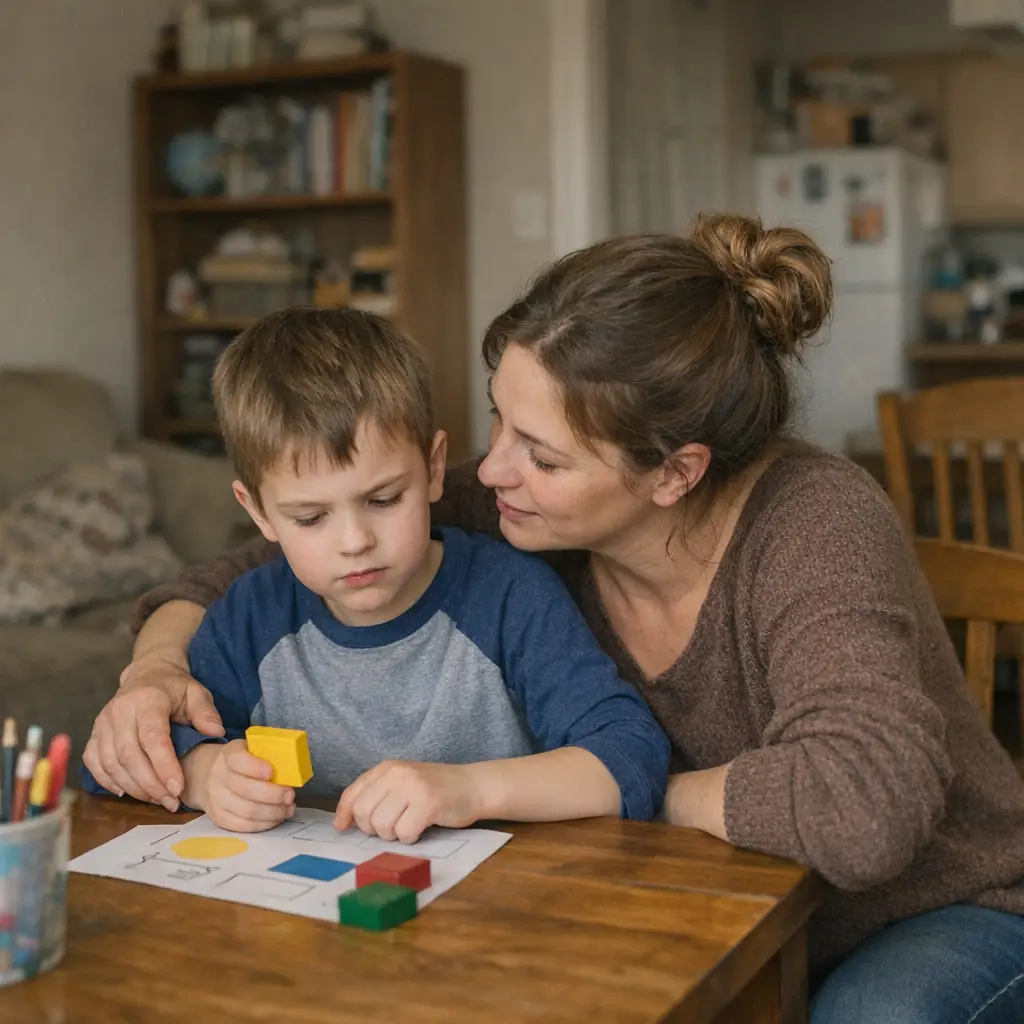
How to Help a Child with Developmental Delays at Home
Most parents do not expect it to feel this overwhelming until it does.
At first, it may look like a few hard moments during the day. Trouble with routines. Big feelings over small changes. Difficulty communicating needs. A child who seems to need more support than other children the same age.
Then little by little, it starts to affect everything.
You may find yourself second-guessing every choice. Wondering if you are doing enough. Looking up advice late at night and feeling more confused than before. Wanting to help your child right away, but not always knowing what help should actually look like at home.
If that is where you are right now, you are not alone.
And you do not need to have all the answers to begin.
What You Need to Know First
If you are trying to figure out how to help a child with developmental delays at home, the most important thing to hear is this: support does not have to be complicated to be meaningful.
Children often respond best to steady, simple, loving support they can rely on every day. That can look like calmer routines, clearer communication, patient repetition, and creating a home environment that feels safe instead of rushed.
It also means recognizing that you were never meant to carry all of this by yourself.
The goal is not to make home feel like a classroom or a program. The goal is to make home feel supportive, predictable, and encouraging so your child can keep growing in a way that feels manageable for your family.
When It Starts to Feel Like Too Much
There is usually a point when parents stop thinking, maybe this is just a phase, and start thinking, I need to do something, but I am not sure what.
This is often the moment families do not see coming.
What begins as a few daily struggles can turn into stress that follows you through the whole day. Getting dressed becomes a challenge. Mealtime becomes tense. Transitions become hard. Bedtime feels longer than it should. Even small outings can start to feel like too much to manage.
And that is where it starts to feel heavy.
Many parents also carry quiet guilt during this stage. They worry they missed something. They wonder whether they should have started sooner. They compare their child to others and feel unsure about what is normal and what is not.
That emotional weight matters.
Because when a parent feels overwhelmed, the whole household feels it too.
Why This Gets Harder Over Time
Without clear support, everyday challenges usually do not stay small. They tend to spread into more parts of life.
A child who struggles with transitions may begin resisting more routines. A child who has trouble expressing needs may become frustrated more often. A parent who is trying to stay calm through it all may slowly become exhausted, discouraged, or burned out.
This is where things start to feel heavier.
Not because anyone is failing, but because uncertainty takes energy. So does repeating the same hard moments every day without a plan that feels workable.
Over time, families may start avoiding activities that feel stressful. Siblings may feel the tension. Parents may stop asking for help because they think they should be able to manage it on their own.
And this is where support starts to matter more.
Early, steady help can make home life feel calmer, more predictable, and less emotionally draining for everyone involved.
What This Actually Looks Like Day to Day
When people talk about helping a child at home, it can sound vague. But in real life, support usually shows up in very ordinary moments.
It looks like slowing down a routine so your child has time to process what comes next.
It looks like using the same simple words again and again so directions feel familiar.
It looks like noticing what helps your child feel safe and what tends to make the day harder.
It looks like celebrating small wins that other people might not see.
For many families, home support may include things like:
- Keeping daily routines as consistent as possible
- Giving one step at a time instead of too many directions at once
- Using calm repetition instead of rushing
- Building in breaks when a child seems overstimulated or frustrated
- Creating simple choices to support independence
- Offering encouragement for effort, not just outcomes
These things may seem small.
But small does not mean unimportant.
For a child with developmental delays, small patterns repeated with care can make a big difference in how safe, capable, and supported they feel at home.
What Support Can Look Like
Support does not always mean adding more pressure or more tasks. Often, it means making daily life feel lighter and more doable.
For one family, support may look like having another caring adult help with after-school routines so the evening feels calmer. For another, it may mean companionship during play, help with simple daily habits, or gentle support during transitions that are usually hard.
Sometimes families just need another steady presence in the home.
Someone patient. Someone dependable. Someone who understands that progress is often slow and that emotional safety matters just as much as structure.
That kind of help can give parents room to breathe while giving the child more consistent support during everyday moments.
| Daily Challenge | What Gentle Support May Look Like |
|---|---|
| Difficulty with routines | Keeping a predictable schedule and using calm reminders |
| Frustration during transitions | Giving extra time, using simple cues, and staying steady |
| Trouble staying engaged | Offering one-on-one companionship and guided activities |
| Parent burnout | Sharing the daily load so home feels less overwhelming |
The point is not perfection.
The point is creating more calm, more connection, and fewer moments where everyone feels stretched too thin.
A Simple Way to Start
If everything feels like too much right now, start smaller than you think you need to.
Pick one part of the day that feels hardest. Maybe it is the morning routine. Maybe it is mealtime. Maybe it is homework, bath time, or bedtime.
Then ask yourself a few simple questions:
- What seems to upset or overwhelm my child during this part of the day?
- What helps them feel calmer or more secure?
- What can I simplify?
- Where do I need more support?
You do not have to fix the whole day at once.
In fact, trying to change everything at the same time usually makes parents feel even more overwhelmed. A better starting point is choosing one routine, making it a little calmer, and building from there.
That is often where confidence begins.
What to Look for in Help
If you are thinking about bringing in support, it helps to know what actually matters.
Families often assume they need someone who has the perfect script or all the right answers. But in home care, what matters most is often much more human than that.
Look for help that feels:
- Patient and calm
- Consistent and dependable
- Respectful of your child’s pace
- Supportive of your family’s routines
- Focused on companionship and daily comfort
- Easy to communicate with and easy to trust
The right support should not make your home feel more stressful. It should help your child feel more comfortable and help you feel less alone in the day-to-day work of caregiving.
For many families, that is the difference that matters most.
Common Mistakes Families Make
When parents are doing their best under pressure, it is easy to fall into patterns that make things harder without meaning to.
One common mistake is trying to do too much at once. Families often gather a long list of ideas, routines, charts, and strategies, then feel defeated when none of it feels sustainable.
Another is expecting progress to happen quickly. When it does not, parents may feel discouraged and assume what they are doing is not helping.
Some families also wait too long to ask for support because they think needing help means they are not handling things well.
That is not true.
Support is not a sign that you are falling short. It is often a sign that you are paying attention to what your child and your family truly need.
It also helps to avoid comparing your child’s pace to someone else’s. Every child is different, and home support works best when it responds to the child in front of you, not to outside pressure.
Questions Parents Often Ask
How can I help my child with developmental delays at home without feeling overwhelmed?
Start with one routine at a time. Focus on making daily life calmer and more predictable rather than trying to do everything at once. Simple, steady support is often more helpful than doing a lot all at once.
What kind of home support helps most?
Support that is calm, consistent, and easy to repeat day after day usually helps most. This can include routine, encouragement, patient communication, companionship, and extra help during parts of the day that feel hardest.
Do I need to turn home into a structured program?
No. Most families benefit more from a supportive home rhythm than from trying to make every moment instructional. The goal is to create comfort, stability, and manageable routines.
When should I ask for extra help?
If your household feels constantly stressed, routines are becoming harder to manage, or you are feeling emotionally worn down, it may be time to consider extra support. Many families wait longer than they need to.
Can companionship and daily support really make a difference?
Yes. A calm, reliable presence can help children feel more secure and can take pressure off parents during difficult parts of the day. Even small support can make family life feel more manageable.
A Calm Next Step
If you have been trying to hold all of this together on your own, it makes sense that you are tired.
This kind of care is deeply personal. It asks for patience, flexibility, emotional strength, and more energy than most people realize from the outside.
You do not need to do it perfectly to do it well.
And you do not need to wait until things feel urgent to bring in support.
Sometimes the most helpful next step is simply making home feel a little calmer, a little more supported, and a little less heavy than it feels right now.
Home Health Smiles provides non-medical in-home companionship and daily support for families caring for children with special needs. For parents who need a steady, caring extra hand at home, that support can be a gentle and reliable next step.