
How to Build a Daily Routine for a Special Needs Child
Most families do not expect something as simple as the flow of a day to feel this heavy.
But then the mornings get harder. Transitions turn into stressful moments. Bedtime feels longer than it should. And somewhere in the middle of trying to hold everything together, you start wondering if a little more structure would help your child feel calmer—and help you breathe again too.
If that sounds familiar, you are not alone.
Creating a daily routine for a special needs child is not about making life rigid or perfect. It is about making the day feel more predictable, more supportive, and a little less overwhelming for everyone in the home.
And sometimes, that small shift matters more than people realize.
What families often need most
A daily routine can help bring a sense of calm to a home that feels pulled in too many directions.
For many children with special needs, knowing what comes next can ease stress, support smoother transitions, and make everyday activities feel safer and more manageable. For parents, grandparents, and caregivers, routine can also reduce the mental load of constantly adjusting to the unexpected.
This does not mean every hour has to be planned. It means having a gentle rhythm to the day.
When that rhythm is missing, even simple parts of the day can start to feel harder than they should.
- Getting dressed may lead to frustration
- Leaving for school may feel rushed and tense
- Meals may feel inconsistent or stressful
- Homework or quiet time may be difficult to begin
- Bath time and bedtime may turn into long emotional transitions
A simple structure helps children know what to expect. And that can help the whole household feel more steady.
When it starts to feel like too much
Sometimes families do not notice how much stress comes from unpredictability until the entire home begins to feel it.
At first, it may just look like a hard morning here and there. A rough bedtime. A child becoming upset when plans change. A caregiver feeling tired by the end of the day.
Then it keeps happening.
This is where things start to feel heavier.
You might notice your child struggles most during transitions. You might feel like you are repeating the same reminders all day. You may begin each morning already bracing yourself for what could go wrong.
And this is often the moment families do not see coming.
What looks like behavior on the surface is sometimes a sign that the day feels uncertain, rushed, or overstimulating. A child may not have the words to explain that. They simply respond to how the day feels.
That is why routine matters. Not because structure fixes everything, but because it gives the day a shape your child can begin to trust.
Why this gets harder over time
When there is no steady routine, caregivers often end up carrying the full weight of every transition themselves.
They remind. Redirect. Reassure. Adjust. Start over.
Again and again.
Over time, that can become exhausting.
This is where many families start to feel worn down by the day-to-day unknowns. What seems like a small lack of structure can slowly make everyday moments harder for everyone. A child may become more resistant. A parent may feel more frustrated. Siblings may feel the tension too.
And this is where support starts to matter more.
Without some kind of daily rhythm, the home can begin to feel reactive instead of calm. That can affect:
- Emotional regulation during transitions
- Consistency with meals, learning, and rest
- A child’s confidence in moving through the day
- The caregiver’s energy and patience
- The overall stress level in the home
Routine does not remove every challenge. But it can lower the number of daily surprises that make those challenges harder.
What this actually looks like day to day
A structured daily routine does not have to be complicated.
In real life, it often looks like repeating the same basic pattern each day so your child begins to know what comes next. That sense of predictability can make a big difference, especially during common transition points.
For example, a simple weekday routine might include:
| Time of Day | Simple Routine Focus |
|---|---|
| Morning | Wake up, bathroom, get dressed, breakfast, leave for school or start home activity |
| After school | Snack, quiet time, homework or guided activity, movement break |
| Evening | Dinner, calming activity, bath or hygiene routine, bedtime steps |
The goal is not to control every moment. The goal is to create familiar anchors in the day.
You might notice your child responds well to:
- Doing things in the same order
- Having extra time before transitions
- Using simple reminders
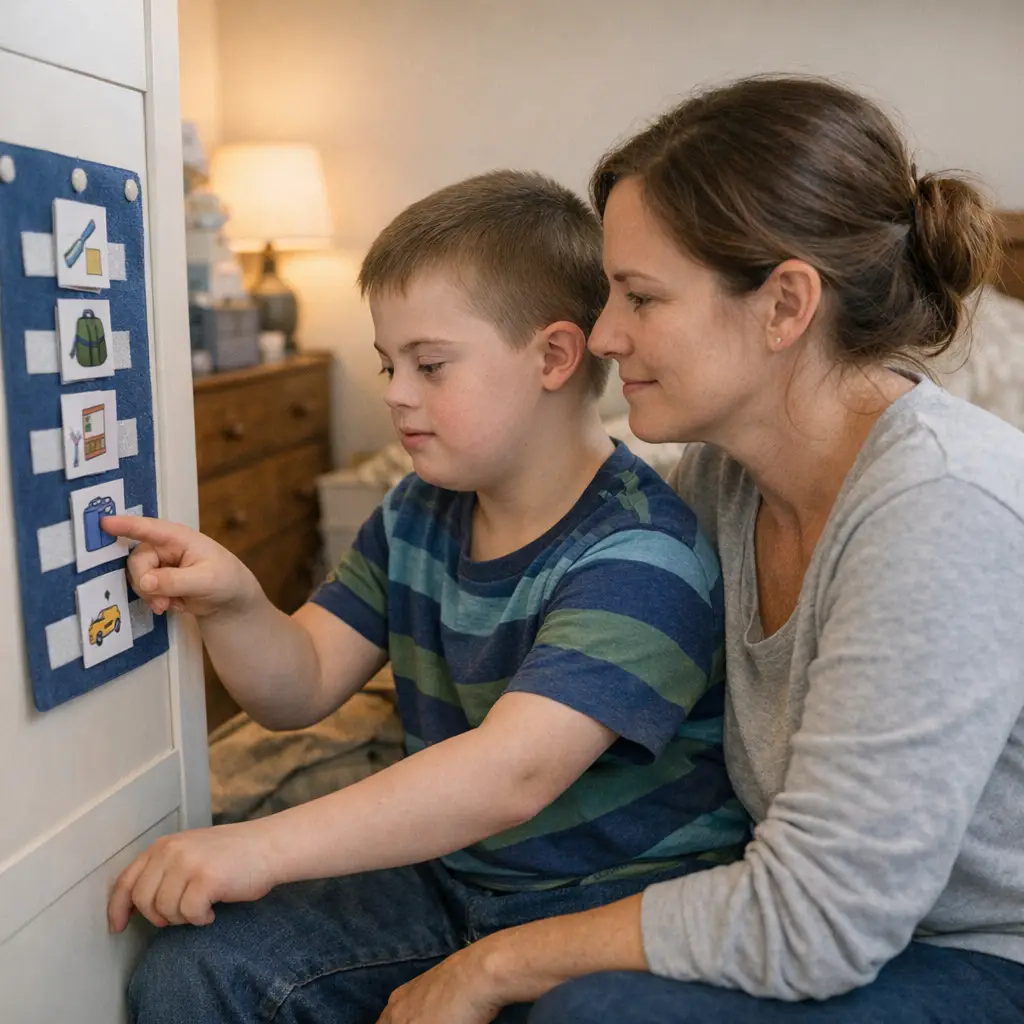
- Seeing a visual schedule or picture chart
- Repeating calming bedtime habits
Some children need more flexibility. Some need more repetition. Some do best with routines built around school, therapy, meals, and sleep. What matters most is choosing a routine that fits your child and your real life.
Not the ideal version of your life.
What support can look like
Many families assume they should be able to figure this all out on their own.
But when each part of the day starts to feel harder to manage, outside support can bring relief in very practical ways.
For a family caring for a special needs child, support may look like having a trusted companion who helps maintain consistency at home. That might mean helping with after-school transitions, keeping a calm bedtime rhythm, assisting with everyday tasks, or simply being a steady, reassuring presence during parts of the day that usually feel stressful.
That kind of support is not about replacing a parent or taking over. It is about making the day feel more manageable.
A companion caregiver can help with things like:
- Keeping familiar routines in place
- Supporting calm transitions between activities
- Providing patient, consistent guidance
- Helping with meals, tidying, and daily tasks
- Giving family caregivers room to breathe
For many families, this is the moment when daily life starts to feel less chaotic and more supported.
A simple way to start
If building a routine feels overwhelming, start smaller than you think you need to.
You do not need to rebuild the entire day at once. In fact, it usually works better when you begin with one part of the day that feels the hardest.
For some families, that is the morning rush. For others, it is the stretch between after-school time and bedtime.
Choose one area first.
Then keep it simple:
- Pick one daily transition that feels stressful
- Create 3 to 5 steps that happen in the same order
- Use the same words and reminders each day
- Give extra time when possible
- Stay consistent long enough to see what helps
This can be as basic as:
Snack → quiet time → homework or activity → dinner
Or:
Bath → pajamas → book → lights low → bed
Simple routines often work best because they are easier to repeat.
And repetition is what helps a routine feel safe.
What to look for in help
If your family needs extra support, the right kind of help should feel calming, dependable, and easy to trust.
You are not just looking for someone to fill time. You are looking for someone who understands how much consistency matters in a child’s day and how important it is to show up with patience and care.
When exploring in-home support, it can help to look for someone who can:
- Follow a family’s established routine
- Support companionship and daily structure
- Be patient during transitions
- Communicate clearly and kindly
- Help reduce stress in the home, not add to it
The best support often feels steady rather than dramatic. Reliable rather than complicated.
That is usually what families need most.
Common mistakes families make
Most routine problems do not come from a lack of love or effort. They usually come from trying to do too much, too quickly, while already overwhelmed.
Here are a few common mistakes that can make a routine harder to keep:
- Trying to build a perfect schedule: A routine should support your life, not add pressure to it.
- Changing too many things at once: Small changes are often easier for a child to accept and for a caregiver to maintain.
- Making the routine too complicated: If there are too many steps, it becomes harder to repeat consistently.
- Expecting instant results: Many children need time before a new rhythm begins to feel familiar.
- Doing everything alone: This is often where families begin to wonder if they can keep managing every part of the day on their own.
If any of this sounds familiar, it does not mean you are doing it wrong.
It just means you may need a gentler approach.
Questions families often ask
Why is a daily routine important for a special needs child?
A daily routine helps create predictability. For many children with special needs, knowing what to expect can reduce stress, support smoother transitions, and make the day feel more manageable.
What should be included in a daily routine for a special needs child?
It depends on the child and the family, but common parts include waking up, meals, school or learning time, breaks, calming activities, hygiene, and bedtime. The most helpful routines are simple and realistic.
How do I start a routine if my child struggles with change?
Start with one part of the day instead of the full schedule. Keep the steps short, repeat them in the same order, and give your child time to adjust. Small changes usually work better than big ones.
Does a routine have to be the same every day?
No. It helps to keep the main parts of the day consistent, but some flexibility is normal. The goal is a steady rhythm, not a rigid schedule.
When should families consider extra help at home?
If the day feels consistently stressful, transitions are becoming harder to manage, or caregivers are feeling worn down, extra support at home can help create more consistency and reduce pressure on the family.
A calm next step
If home life has started to feel unpredictable, you do not need to solve everything at once.
You may only need a little more structure. A little more consistency. A little more support around the parts of the day that keep feeling hard.
A daily routine for a special needs child is not about doing more. It is about making the day feel steadier, safer, and easier to move through together.
And if that has become difficult to manage alone, having compassionate in-home support can make those daily moments feel lighter.
At Home Health Smiles, we believe care starts with companionship, patience, and practical day-to-day support that helps families feel more grounded at home.
Sometimes the best next step is not a big one.
Just a calmer one.